
Biogas Plant Calculator: Digester Size, CHP vs Biomethane Profit, Carbon & Digestate
Mix up to 3 feedstocks (manure, silage, food waste, press mud), and instantly see digester volume, methane, electricity or CBG output, 4 revenue streams, payback and 15-year value. Works in any currency.
1. Feedstock Mix (Co-Digestion)
2. Process Settings
3. Your Local Prices
Route Comparison: Electricity (CHP) vs Biomethane (CBG)
| Metric | CHP Electricity + Heat | Biomethane / CBG |
|---|
Biogas Plant Design Guide
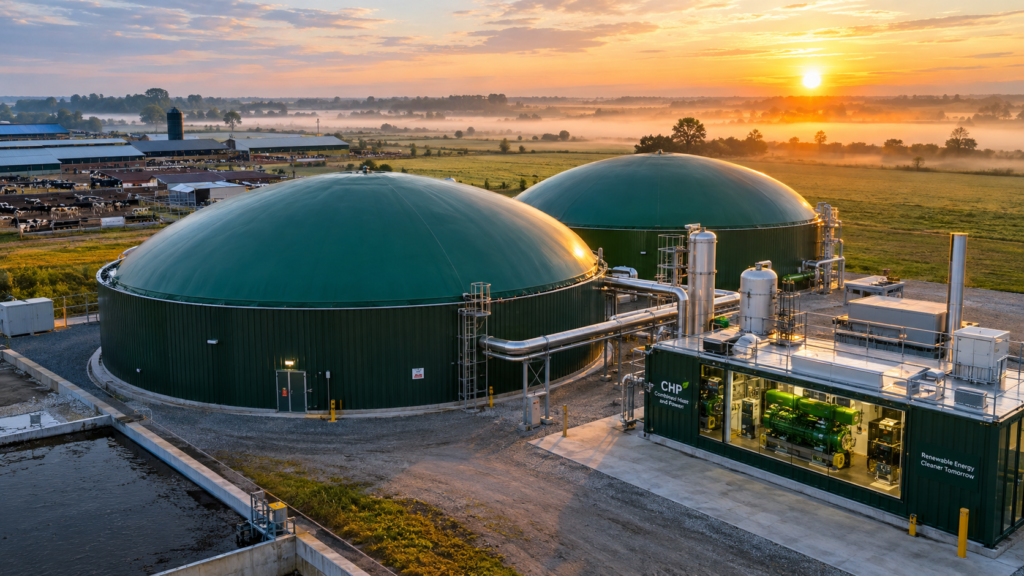
Anaerobic digestion converts manure, crop residues and organic waste into biogas (55-65% methane) and a nutrient-rich digestate. Profit comes from four streams: energy (electricity, heat or biomethane), digestate fertilizer value, carbon credits and, for food waste, gate fees.
Key Formulas
CH₄ (m³/day) = Σ [ feed (kg) × TS × VS × B0 ] × process efficiency
Active volume (m³) = daily feed (m³) × HRT
OLR = VS (kg/day) / active volume (m³), target 1-4
Energy = CH₄ × 9.97 kWh/m³ (lower heating value)
CAPEX uses scale-based cost curves for digester, CHP engine and gas upgrader; carbon uses 28 × GWP for methane and avoided fossil energy. All are planning estimates, so verify with local quotes and a feasibility study.
FAQ
What is a safe organic loading rate? 1-4 kg VS/m³/day for wet digestion. Above 5 risks acidification, below 1 means an oversized, costly tank.
Why use co-digestion? Adding silage or food waste (B₀ 0.33-0.45) to manure (0.20) can double gas yield from the same digester.
What is a good payback? Under 5 years is strong for agricultural biogas; policy support or gate fees can improve it further.
© AgroEngineeringZone.com — Free agricultural & bioenergy engineering tools worldwide. Estimates only, not a substitute for professional engineering design.